How AG1 Turned a $99 Greens Powder Into a $1.2 Billion Empire (And Almost Lost It All to Churn)
The supplement industry has a dirty secret: acquiring customers is easy. Keeping them is nearly impossible.
Chris Ashenden learned this the hard way.
By 2017, Athletic Greens had been grinding for seven years. The product was solid, 52 formula iterations, NSF Certified for Sport, a genuine solution to "supplement fatigue." They had bootstrapped to meaningful revenue. They had a story (founder's health journey). They had the "one scoop replaces 17 pills" value prop that made health-conscious consumers whip out their credit cards.
But they were bleeding.
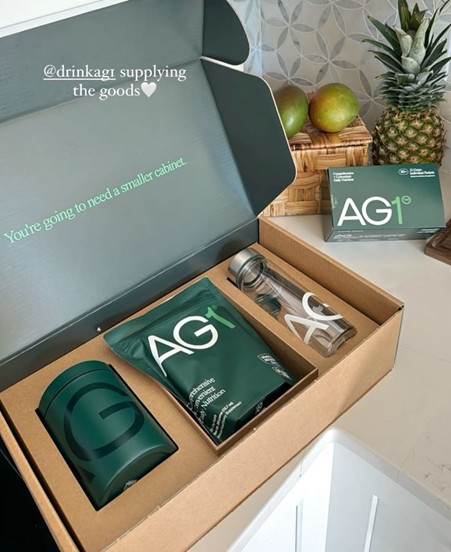
Customers would sign up for the subscription, take AG1 for three weeks, then cancel before the second shipment. The unit economics didn't work. The "welcome kit" (free canister, scoop, vitamin D drops) was expensive. If customers didn't stay for at least three months, AG1 was essentially paying people to try their product.
The growth was there. The profitability wasn't.
This is the story of how they fixed it and the systems that turned a leaky bucket into a $600M annual revenue machine.
The Acquisition Addiction
Like most DTC brands in 2017, AG1 was hooked on Facebook ads. They were spending millions, scaling aggressively, celebrating ROAS wins.
But iOS 14.5 was coming. And even before that, the math was brutal:
Customer Acquisition Cost: $60-80.
First order margin (after welcome kit costs): Negative.
Break-even point: Month 3 of subscription.
Actual retention to Month 3: ~40%.
They were building a growth engine that required perfect retention to survive.
The creative team was burning out. They needed 40-60 new assets per month to combat fatigue. The "sweep the pills off the table" visual worked, until it didn't. Every three weeks, ROAS would crater, and the media buyer would panic-Slack the creative team.
"We were on a hamster wheel," said a former growth lead (name anonymous). "Every month started at zero. We had no compounding."
The podcast strategy was working: Tim Ferriss, Joe Rogan, Andrew Huberman, but attribution was murky. They were spending an estimated $2.2M monthly on podcast ads with no clear view of which hosts actually drove subscriptions vs. just brand awareness.
They had reached. They didn't have a retention infrastructure.
The Systems Driving Their Growth
01. The Churn Crisis
The cancellation flow was basic. Customer clicks "cancel," selects a reason from a dropdown, done. No intervention. No save attempt. No data capture beyond a superficial "why."
The reasons were predictable:
"Too expensive" (35%).
"Didn't like the taste" (28%).
"Didn't see results" (22%).
"Product issues" (15%).
Email marketing was present but primitive. Welcome flow? Check. Abandoned cart? Check. Post-purchase? A single "thanks for your order" email.
There was no lifecycle strategy. No behavioral segmentation. No "day 7 check-in" to catch people before they fell off. No "day 21" education about the 30/60/90-day results timeline. No SMS to catch people in the moment of doubt.
What we build for you:
Pre-churn detection flows, segmented save logic, habit-formation sequences, and AI-driven churn prediction triggers. Retention becomes automated, not reactive.
02. Segmented Cancellation Infrastructure
AG1 does not treat all churn equally.
Price-sensitive customers receive frequency adjustments.
Taste objections receive recipe content.
“No results” receives education and science-backed proof.
Each objection has a mapped response path.
That single shift increases cohort profitability without increasing ad spend.
What we build for you:
Dynamic exit-intent workflows, segmented save offers, value-reframing automation, and churn-data dashboards that feed product decisions.
03. Podcast & Affiliate Machine
AG1 dominated podcast advertising for years.
But the real advantage wasn’t exposure. It was an attribution:
Custom landing pages.
Unique promo codes.
Host-specific offers.
Post-purchase source tracking.
Podcasts became measurable and scalable.
Affiliate moved from influencer gifting to performance infrastructure.
What we build for you:
Affiliate tier automation, creator CRM systems, commission tracking, dynamic landing page generation, and attribution logic that separates awareness from revenue.
You move from guesswork to controlled scale.
04. Creative Velocity Content System
The supplement space burns through creativity quickly.
Instead of producing one-off ads, AG1 operates modularly:
Hook libraries.
Segment-based messaging angles.
Reusable visual frameworks.
UGC amplification loops.
When fatigue hits, replacement assets are already tested.
What we build for you:
Modular creative libraries, AI-assisted briefing pipelines, creator routing systems, and automated performance tagging. Creative testing becomes structured, not chaotic.
Our services help you create digital products and solve your problems analysis. How do you create compelling presentations that wow your colleagues and impress your managers?
Our services help you create digital products and solve your problems analysis. How do you create compelling presentations that wow your colleagues and impress your managers?

%20(3).png)


%20(2).png)
.png)