The Systems, Automation, and Creator Infrastructure Powering Its Compounding Revenue Engine.
Most direct-to-consumer beauty brands invest heavily in branding, influencer visibility, and product storytelling. What often goes unnoticed is the infrastructure
that converts that attention into predictable revenue.
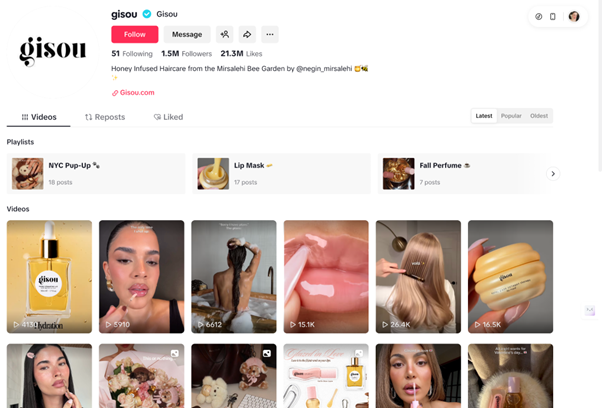
Gisou offers a strong case study in this distinction. While the brand is widely recognized for its honey-infused positioning and strong creator presence its sustained growth appears to be driven by structured systems rather than isolated campaigns.
Let’s break it down.
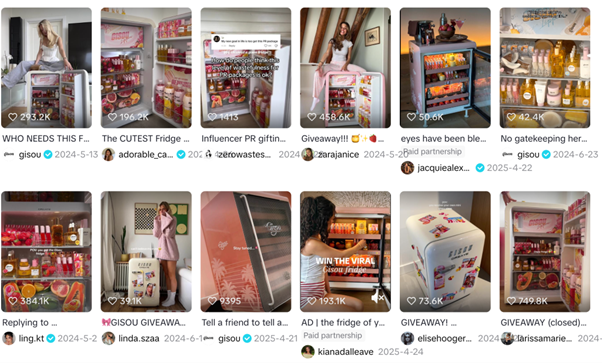
Creator Seeding as a Structured Distribution Channel
Influencer gifting is common in beauty. Structured creator seeding is not.
Public case data shows that Gisou generated more than 2,500 authentic text reviews across six markets via Skeepers. In Europe alone, 37 campaigns achieved a 94% ship-to-post rate.
That level of execution strongly suggests formal onboarding systems, follow-up processes, and campaign tracking infrastructure.
This matters because user-generated content does more than build awareness. It supports retail partner conversion, fuels paid ad creative libraries, strengthens SEO through reviews
, and reinforces brand trust across platforms.
Instead of launching a product and searching for proof, Gisou appears to launch with proof already in circulation.
How Mid-Market Brands Can Apply This
The objective is not to increase influencer count. It is to increase operational clarity.
Marketing automation infrastructure
enables:
Automated creator onboarding workflows
Campaign tracking and compliance monitoring
Centralized UGC asset libraries
CRM-linked performance dashboards
When managed systematically, creators become an acquisition channel rather than a branding expense.
Tiered Affiliate Infrastructure That Scales with Performance
Gisou operates a tiered affiliate structure with a 10% base commission, increasing to 15% for top performers, alongside a 30-day cookie window.
This structure aligns with typical beauty buying behavior. Customers rarely purchase immediately after first exposure. They compare options, watch tutorials
, and revisit content before deciding. A 30-day attribution window captures that delayed intent.
Tiered commissions introduce performance incentives without increasing fixed marketing costs. Top creators scale naturally, while lower-performing partners
contribute proportionally.
Operational Requirements
Affiliate programs become complex quickly without automation. We support:
Tier-based commission logic
Automated onboarding and briefing
AI-driven partner scoring
CRM-based revenue attribution
The result is a performance channel that scales predictably rather than sporadically.
Lifecycle Marketing as a Revenue Backbone
Behind visible creator momentum sits a structured lifecycle marketing engine.
When connected properly, each channel reinforces the next. UGC supplies creative assets. Paid ads increase exposure. Retargeting re-engages visitors.
Lifecycle sequences close the loop.
Disconnected systems produce volatility. Integrated systems produce stability.
Loyalty as a Long-Term LTV Strategy
Gisou operates a points-based loyalty program integrated with lifecycle messaging.
Loyalty programs increase purchase frequency, deepen first-party data collection, and strengthen customer retention. However, loyalty only becomes
strategic when synced operationally.
Operations automation
ensures that loyalty triggers feed into marketing systems and CRM records, allowing behavioral data to influence segmentation and messaging.
Without integration, loyalty remains cosmetic. With integration, it becomes a compounding retention mechanism.
Where Growing Brands Should Start
Scaling does not require copying every layer at once. It requires identifying the constraint limiting growth.
If content velocity is low, focus on structured creator workflows.
If CAC is rising, implement tiered affiliate logic.
If repeat purchase is weak, prioritize lifecycle automation.
If teams are overwhelmed, automate operational workflows.
Final Takeaway
Gisou’s growth appears to be built on integration rather than isolated tactics.
Creator seeding feeds affiliate performance. Affiliate content supports paid amplification and social media content . Paid traffic enters lifecycle automation. Lifecycle messaging drives repeat purchase. Loyalty reinforces long-term value.
The competitive advantage lies in how these systems connect.
For mid-market brands, the opportunity is not to replicate campaigns, but to install the infrastructure that turns attention into measurable, repeatable revenue.
Our services help you create digital products and solve your problems analysis. How do you create compelling presentations that wow your colleagues and impress your managers?
Our services help you create digital products and solve your problems analysis. How do you create compelling presentations that wow your colleagues and impress your managers?

%20(2).png)


%20(3).png)
.png)